

Heritage craftsmanship
Decades of know-how and passion for fine leather goods.
Connect with Italian bag manufacturers and artisans who turn ideas into distinctive collections. From heritage workshops to advanced factories, Italian production combines quality, reliability and style.
For generations, Italian bag makers have combined creative talent and technical mastery. Today, this heritage meets contemporary design and global standards to build bags that stand out in every market.
About Italian bags →Decades of know-how and passion for fine leather goods.

Modern shapes, functional details and market-driven collections.

Skilled hands, precise processes and consistent quality.

Bags that enhance your identity and your commercial value.
The practical question is not simply “Who makes beautiful bags?” It is “Who is set up to make this collection, at this quality level, in these quantities, for this market?” ItalianModa B2B helps buyers narrow that question before direct contact.
Two Italian companies may produce bags that look similar in a photograph and still be very different partners. One may excel at hand-finished capsules and low-volume work. Another may be organized for repeat orders, standardized components and seasonal replenishment. A third may specialize in fabric, woven materials or lightweight resort bags rather than classic leather goods.
The practical question is not simply “Who makes beautiful bags?” It is “Who is set up to make this collection, at this quality level, in these quantities, for this market?” ItalianModa B2B helps buyers narrow that question before direct contact.
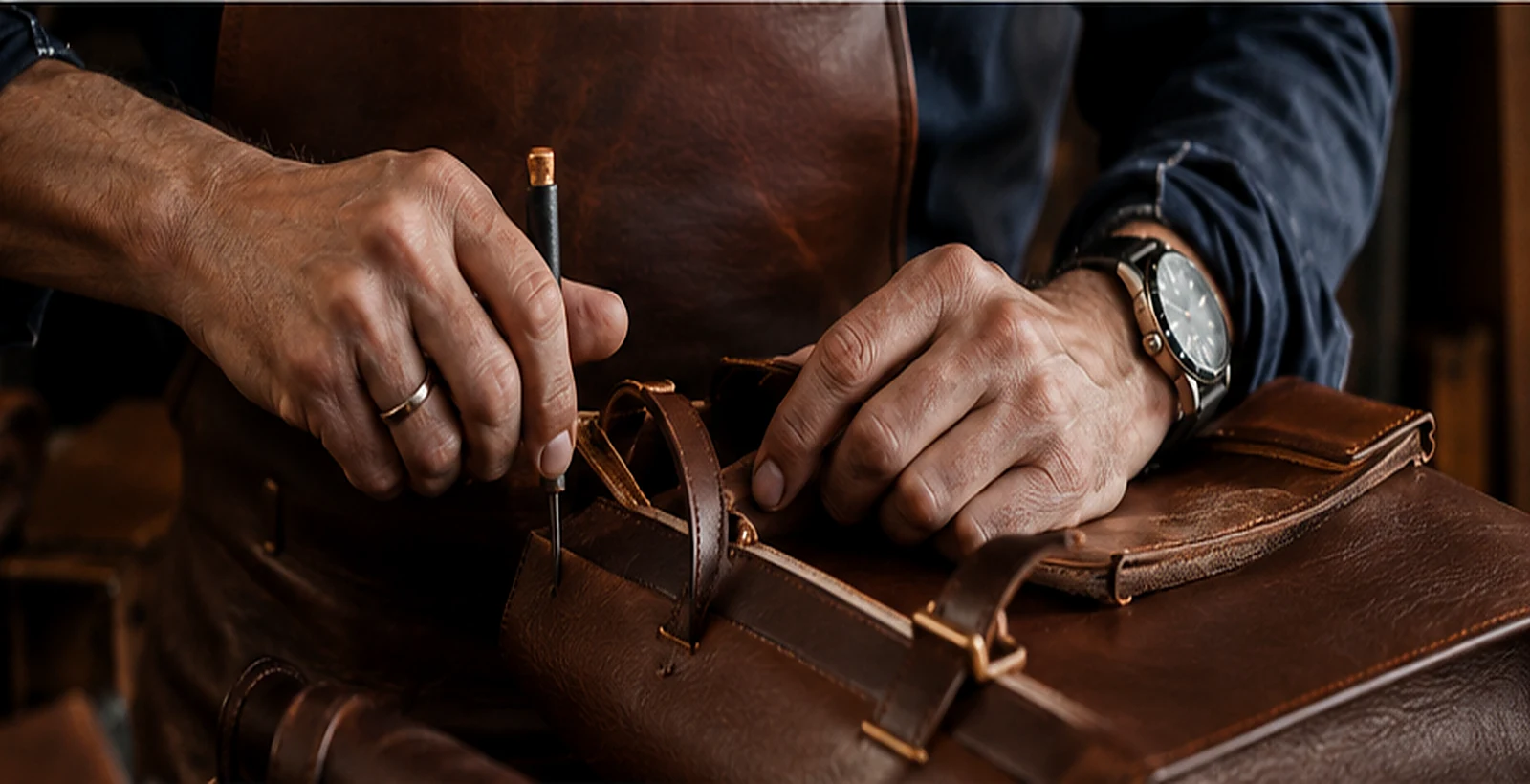
Best for distinctive shapes, close development work, hand finishing and smaller, carefully managed runs.
A useful fit for growing brands that need sampling support, controlled minimums and repeatable production.
Suited to planned collections, multiple SKUs, coordinated components, documented quality procedures and reorder programs.
Focused on a particular field such as travel bags, fabric shoppers, small leather goods, technical bags or premium leather handbags.
The strongest projects are usually the clearest. Manufacturers can work faster, quote more accurately and avoid avoidable revisions when the buyer supplies a realistic brief from the start.
Define market, retail positioning, target ex-factory range, launch date and expected order size.
Provide dimensions, reference images, construction notes, closures, pockets, handle lengths and branding requirements.
The manufacturer checks leather or fabric consumption, hardware, lining, labor and packaging before confirming feasibility.
A first sample reveals proportion, function and construction issues that are difficult to judge on paper.
Final sample, color references, components, labels, packaging and quality tolerances are signed off.
Production, final checks, packing, export documents and delivery are coordinated against the agreed schedule.


The Italian supply base covers more than luxury handbags. Buyers can source commercial collections, seasonal fashion pieces, travel products and coordinated accessories from companies with different technical strengths.

Structured, soft or hybrid constructions for premium and contemporary collections.

Retail, work, travel and everyday styles in leather, canvas, technical textiles or mixed materials.

Compact or medium formats, adjustable straps, chain details and practical internal organization.

Urban backpacks, weekend bags, duffels, business travel and lightweight technical formats.

Evening, ceremony and statement designs with compact construction and distinctive hardware.

Wallets, cardholders, pouches, cases, key holders and coordinated line extensions.

Made-to-brief products for uniforms, hospitality, corporate programs and branded collaborations.
Wholesale, Private Label and White Label are not interchangeable. Each route changes the level of development, the minimums, the timetable and the amount of control the buyer has over the final product.
Buy existing branded collections from Italian suppliers. It is the fastest route for retailers and distributors looking for products ready for resale.
ItalianModa B2B →Develop an original collection or substantially customize a manufacturer’s platform. This route requires clearer briefs, sampling and more production decisions.
ItalianModa B2B →Select proven, unbranded or rebrandable models and apply your identity. It can reduce development time while retaining Made in Italy production.
ItalianModa B2B →The word “quality” is too broad to be useful on its own. Buyers should ask how the bag is built, which materials are used in visible and hidden areas, and what must remain consistent across the order.

Full-grain, corrected, split, suede and embossed leathers behave differently in cutting, edge finishing, structure and wear.
Canvas, cotton, linen, jacquard, raffia, straw and woven materials require specific reinforcement, lining and handle solutions.
High-grade faux leather, coated textiles and performance materials can support lighter weights, easier care or specific price targets.
Zippers, clasps, rings, feet, reinforcement, linings and internal organization often determine whether a bag feels convincing in daily use.
For buyers, geography matters less than the actual production chain: where cutting, assembly, finishing, hardware work and quality control take place, and who is responsible for each stage.
Tuscany is internationally associated with leather goods and a dense network of tanneries, component suppliers and workshops. The Marche and Veneto have long manufacturing traditions and export-oriented companies. Campania and other specialist areas add further capabilities, while producers across Italy work with local and national subcontractors.
For buyers, geography matters less than the actual production chain: where cutting, assembly, finishing, hardware work and quality control take place, and who is responsible for each stage.
Leather expertise, premium production networks and strong access to materials and components.
Technical manufacturing culture, flexible factories and experience with fashion accessories.
Export-oriented companies, organized production and links to wider fashion supply chains.
Artisanal knowledge, fashion-led production and focused capabilities in selected categories.
A concise, usable brief gets better replies than a long message full of adjectives. Give the manufacturer enough information to decide whether the project fits its capabilities.
Italianbagsmanufacturers.com provides the context. ItalianModa B2B provides the companies, product categories and direct contact tools. Use the links below to continue with qualified supplier discovery.
No. Minimums depend on the company, product complexity, materials, component availability and the amount of development required. A focused brief makes the discussion more productive.
Many can, but not all. Coordinated wallets or pouches may be produced in-house, through a specialist department or through a trusted subcontractor.
Not necessarily. Projects range from original development to substantial adaptation of an existing construction. The degree of customization should be agreed before sampling.
White Label or adapted existing models usually require less development than a fully original collection, provided the available styles fit the brand’s positioning.
Yes. The supply base includes fabric, canvas, raffia, straw, faux leather, coated and technical materials, although each manufacturer has its own specialization.
Compare more than price: sampling quality, communication, production responsibility, materials, minimums, lead times, reorder capacity, quality control and export experience all matter.
Use the form to explain the product category, target market, quantities and preferred production route. The more concrete the brief, the easier it is to identify suitable Italian suppliers.
Como, ITALY